Glass towers dominate Dubai’s skyline, and most of them share a problem that has nothing to do with architecture: dust. Fine desert sand settles on every exposed surface within days, and combined with vehicle exhaust, construction debris, and the salt carried in from the coast, a building’s exterior can look noticeably tired within a single season. This is the environment that shapes how facade cleaning services in Dubai actually operate, and why the approach here differs from what works in cooler, less abrasive climates.
Why Facade Condition Affects More Than Appearance
A dirty facade is usually treated as a cosmetic issue, but the buildup itself carries consequences beyond how a building looks. Left unaddressed, it typically leads to:
- Trapped moisture against aluminum cladding and glazing seals, accelerating corrosion over time
- Sealant degradation, weakening the barrier that protects a building’s interior from weather exposure
- Micro-abrasion on stone or painted surfaces, where embedded dust particles combined with wind gradually wear down protective coatings
- Compounding repair costs, since what starts as a visual inconvenience often becomes a structural maintenance issue if ignored too long
Teams like Frontline Technical Services, working across Dubai’s high-rise and commercial properties, generally flag these issues during routine cleaning long before they turn into costly repairs.
What a Facade Cleaning System Actually Involves
There’s no single facade cleaning system that applies to every building. The right method depends on height, facade material, and how the structure was designed for access in the first place.
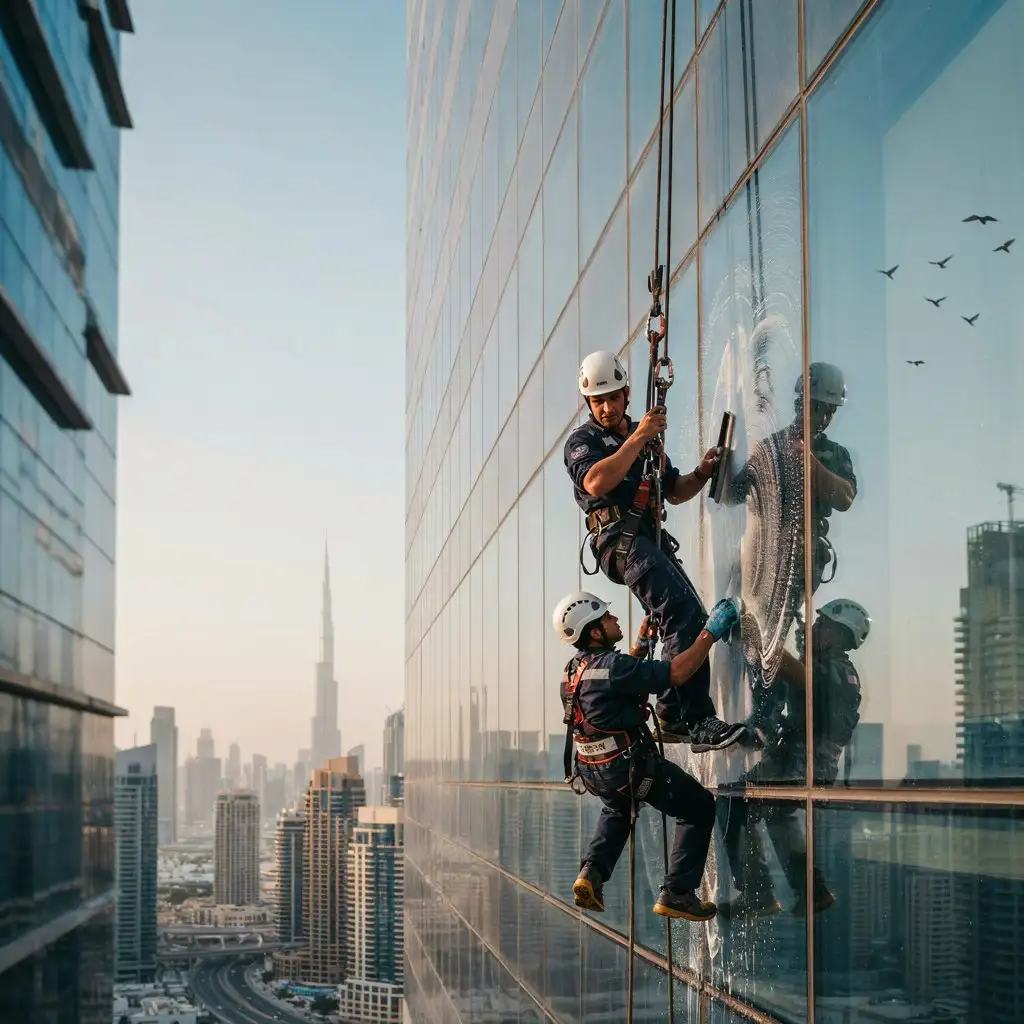
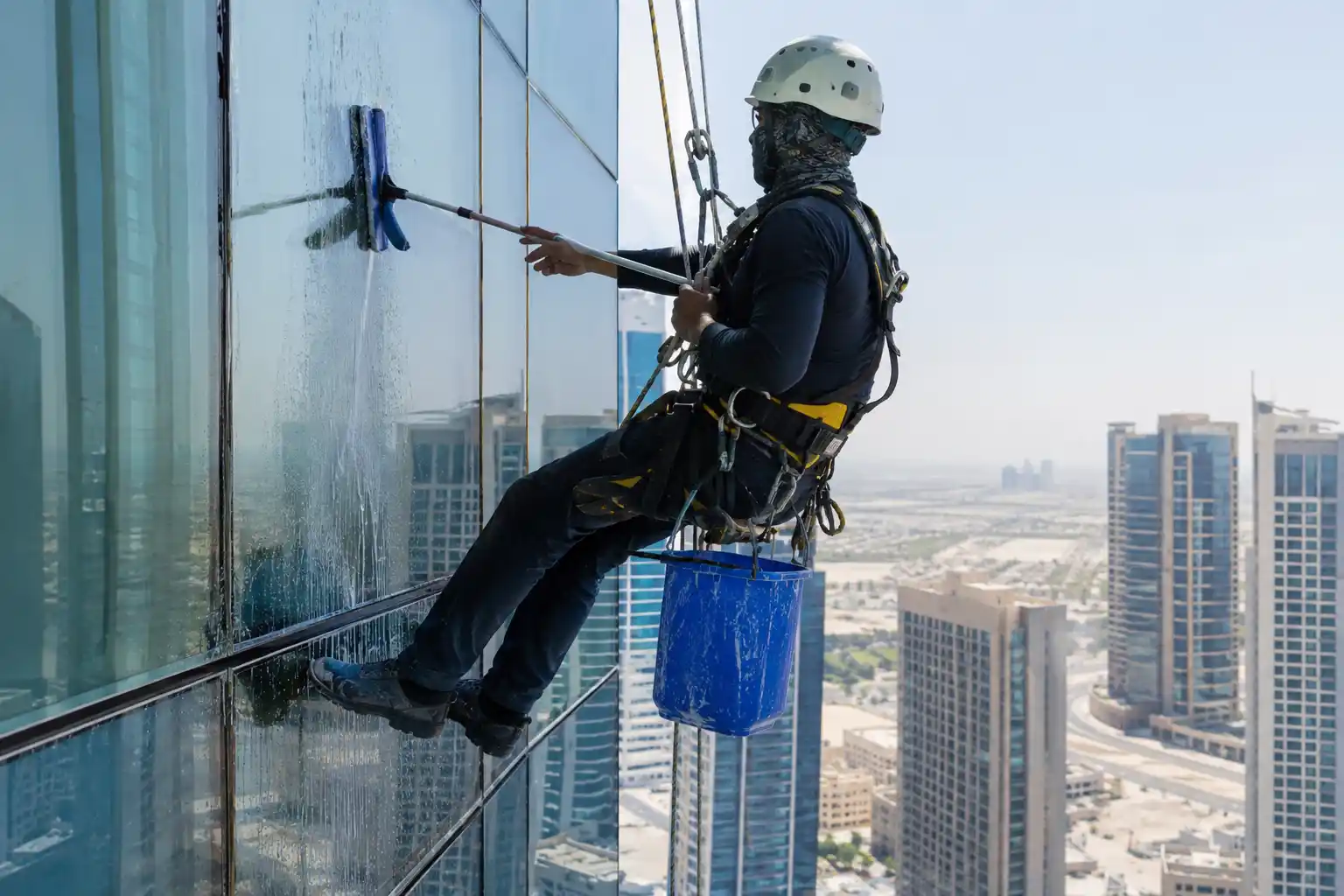
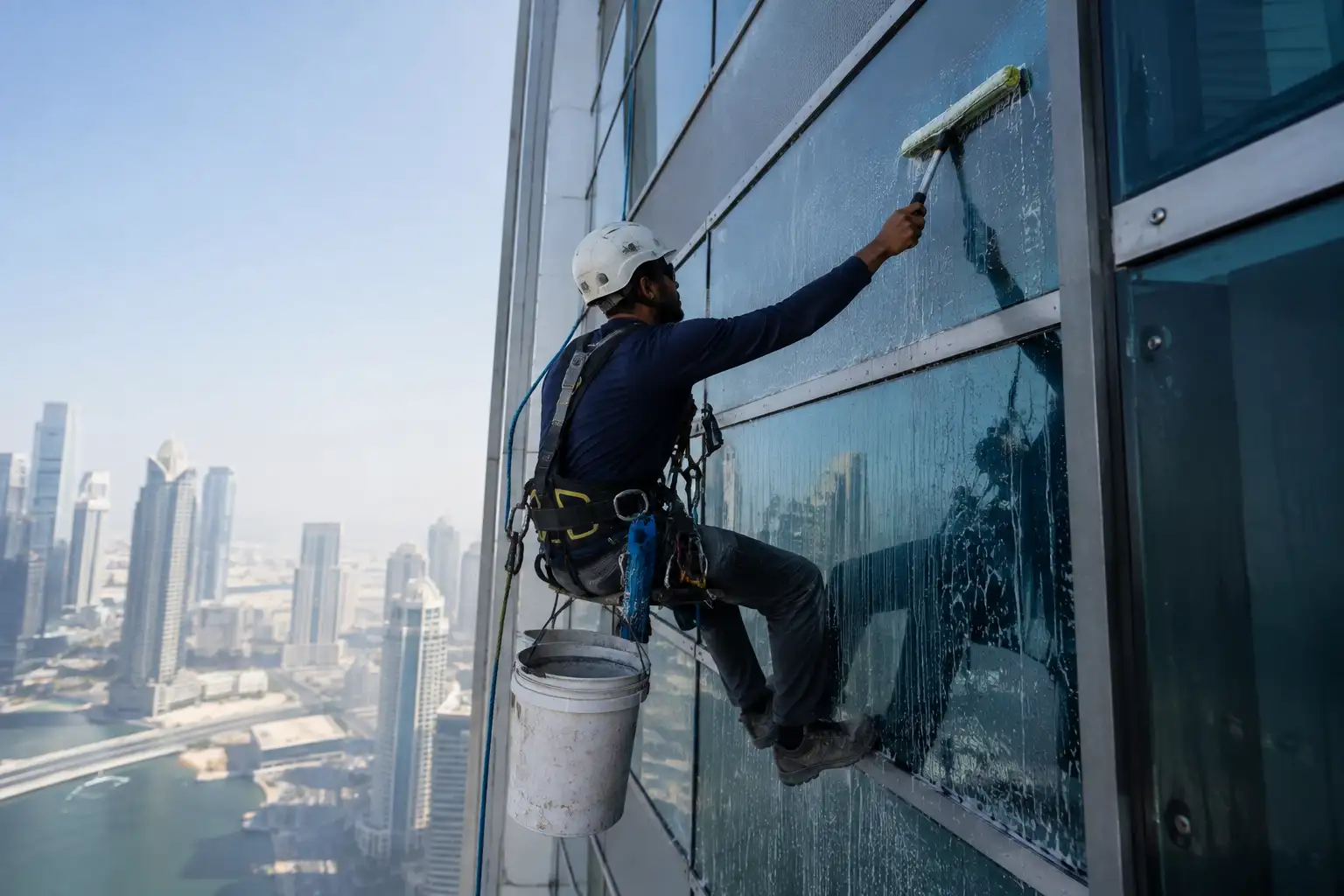
Rope access remains the most common approach for mid- to high-rise buildings without a built-in access system. Technicians work on ropes with independent safety lines, moving section by section across the exterior.
Building Maintenance Units (BMUs), mechanical cradles mounted on the roof, are common on very tall commercial towers where frequent cleaning cycles make a permanent system worthwhile.
Water-fed pole systems with purified water are typically used for lower sections and glass surfaces where a streak-free finish matters more than reaching extreme height.
Choosing between these isn’t just a matter of preference. A building with limited safe anchor points for rope access, for instance, may need a different solution entirely regardless of its height.
Building Facade Cleaning Services and Material Differences
Building facade cleaning services generally have to account for at least three distinct surface types on a single structure, and each behaves differently under cleaning pressure and chemical exposure:
- Glass tolerates purified water and standard squeegee techniques well, producing a streak-free finish without much risk of damage
- Aluminum cladding needs gentler handling, since aggressive scrubbing or the wrong pH cleaning solution can strip protective anodized coatings
- Stone and painted surfaces sit somewhere in between, generally requiring non-abrasive methods to avoid eroding texture or color over repeated cleaning cycles
Treating every surface with the same method is one of the more common mistakes in this line of work, and it’s usually what produces uneven results or, in worse cases, visible surface damage.
External Facade Cleaning Services and Frequency
External facade cleaning services in Dubai typically run on a shorter cycle than what’s standard in temperate regions. Most commercial towers need attention every three to six months, and buildings near active construction sites or major roads often need it more frequently due to heavier particulate exposure.
This frequency isn’t arbitrary. Heat accelerates how quickly dust bonds to glass and metal surfaces, and low humidity means there’s rarely enough natural rainfall to rinse buildings the way it does in wetter climates. Combined, these two factors are why maintenance schedules here tend to run tighter than general international guidance suggests.
What to Ask Before Choosing a Provider
Choosing the right provider is just as important as selecting the correct cleaning method. Property owners comparing different options can also explore our guide to the Top 10 Facade Cleaning Companies in Dubai to understand what to look for when evaluating experience, safety standards, access methods, and service quality.
A few questions tend to separate a reliable facade cleaning provider from one cutting corners:
- Are technicians certified through a recognized body such as IRATA or SPRAT, and can certification be verified by name?
- Does the company carry current public liability insurance matching the building’s risk profile?
- What cleaning method and chemical products are recommended for this specific facade material?
- How is weather, particularly wind, factored into scheduling and safety decisions?
A provider who answers these clearly, rather than defaulting to a generic “we handle everything” response, is usually the safer choice for anything above a few stories.
A Practical Note on Access Method Selection
One detail worth understanding is that taller buildings don’t automatically require the most expensive access system. A well-maintained mid-rise with straightforward geometry can often be cleaned safely and efficiently with certified rope access, while a much taller building with an unusual curved facade might genuinely need a permanent monorail or BMU system regardless of height comparisons. For anyone assessing options, a closer look at how facade cleaning in Dubai providers evaluate individual buildings rather than applying blanket recommendations offers a useful reference point for what a proper assessment should include.
Final Thoughts
Facade cleaning in Dubai isn’t a one-size-fits-all service, and the climate here makes that more true than in most other cities. Material type, building height, access constraints, and local particulate exposure all shape what a proper cleaning plan should look like. Property owners who treat this as routine maintenance rather than an occasional cosmetic fix tend to avoid the more expensive repairs that come from years of accumulated grime and moisture damage.
FAQs
How often should a commercial building’s facade be cleaned in Dubai?
Most towers benefit from cleaning every three to six months, with more frequent attention needed near construction zones or major roads.
Is rope access safe for cleaning tall buildings?
Yes, when performed by certified technicians using independent safety lines and following proper risk assessment procedures for wind and anchor conditions.
Does the type of facade material change the cleaning method?
Significantly. Glass, aluminum cladding, and stone or painted surfaces each require different pressure levels and cleaning solutions to avoid damage.
Can facade cleaning prevent long-term structural issues?
It can reduce the risk. Removing trapped moisture and grime helps slow corrosion on metal components and reduces sealant degradation over time.