A logistics manager in Jebel Ali walked his warehouse floor on a Sunday morning before the week’s shipments arrived. Six months earlier, the floor had been resurfaced. By that Sunday, the forklift lanes were already showing bare patches, the paint had lifted at the loading bay seams, and a chemical spill from the week before had left a permanent stain nobody could scrub out.
The coating hadn’t failed because the paint was bad. It failed because a warehouse floor and an office wall are not the same problem, and someone had treated them as if they were.
That distinction between painting a surface and engineering a coating system for what actually happens on that surface is the entire subject of this guide.
Quick Answer: What You Need to Know
| Question | Short answer |
| What coating lasts longest in a Dubai warehouse floor? | Epoxy and polyurethane systems, typically 5–10 years under heavy forklift traffic |
| What’s the biggest cause of early coating failure? | Skipping or rushing surface preparation not the paint brand |
| Does Dubai’s climate matter for warehouse exteriors? | Yes, UV exposure and heat demand UV-stable, weather-resistant exterior systems |
| Can painting happen without stopping operations? | Yes, with phased scheduling and the right project planning |
| Who handles this in Dubai? | Frontline Technical Services-active in Jebel Ali, Al Quoz, and Dubai Industrial City |
Why Warehouse Painting Is a Different Discipline
A villa wall gets touched by hands, weather, and the occasional scuff. A warehouse floor gets hit by:
- Forklifts turning and braking on the same lanes, all day, every day
- Chemical spills fuel, oils, cleaning agents, sometimes acids
- Pallet drops and dragged loads
- Constant foot and vehicle traffic through the same high-wear zones
Ordinary paint was never engineered for that. Industrial coating systems are and the difference between the two shows up within months, not years.
The core principle: in warehouse painting, the coating system matters less than what’s underneath it. Preparation determines whether a coating lasts two years or ten.
The Real Lifespan of Warehouse Coatings (Not the Sales Pitch)
Technical data sheets often quote impressive numbers. Real-world performance in an active facility looks different.
| Environment | Realistic lifespan | Why |
| Busy logistics floors, narrow aisles, heavy forklift turning | 3–5 years | Constant abrasion and braking wear concentrates in the same lanes |
| Chemical, food, or aggressive-use environments | 2–4 years | Frequent spills, aggressive cleaning, thermal shock |
| Lightly used storage areas with a maintenance plan | 5–8 years | Lower traffic, fewer chemical exposures |
| Well-specified epoxy/polyurethane systems, properly maintained | Up to 10 years | Correct system thickness and topcoat renewal |
Reality check: if a contractor quotes a flat “10 years, guaranteed” without asking about your traffic volume, forklift type, or what chemicals move through the space, treat that number with caution. Lifespan is a function of use, not just product.
Coating Systems: What Actually Goes on a Warehouse Floor and Wall
Floor coatings
| System | Best for | Typical lifespan |
| Epoxy coating | Heavy-duty warehouses, chemical storage areas | 5–10 years |
| Polyurethane coating | Distribution centres, loading docks (better UV and abrasion tolerance than epoxy) | 8–12 years |
| Urethane coating | Cold storage, food processing strong slip resistance | 7–10 years |
| Acrylic coating | Light industrial or office-adjacent warehouse space | 5–7 years, lower upfront cost |
Wall and exterior systems
- Weather-resistant exterior coatings protect against UV, dust and moisture, which matters more in the UAE than almost anywhere else
- Anti-corrosion primers essential where structural steel or exposed metalwork is present
- Easy-clean interior finishes reduce dust buildup and simplify hygiene compliance
For facilities that combine storage with office or admin space, a consistent finish across both areas usually comes from pairing floor and wall work with office painting in Dubai for the administrative sections.
Why Dubai’s Conditions Change the Calculation
Three local factors push warehouse coating decisions in a specific direction, and none of them are optional considerations.
1. Heat and UV load Exterior surfaces face direct sun for months at temperatures that degrade lower-grade coatings faster than in almost any other market. UV-stable, weather-resistant systems aren’t an upgrade here, they’re the baseline.
2. Dust and fine sand Airborne dust settles into any surface with texture or poor sealing, which is why easy-clean, sealed finishes matter more for hygiene and appearance retention than in cooler, less arid climates.
3. Continuous operations Many Dubai warehouses run multi-shift schedules with little natural downtime. Painting has to be planned around operations, not the other way around, which is why phased scheduling and minimal-disruption execution are standard requirements, not add-ons.
The Warehouse Painting Process, Step by Step
- Site inspection: surface condition assessed before any material is chosen.
- Surface preparation: cleaning, repair, and profiling so the coating actually bonds. This step alone determines most long-term outcomes.
- Professional application: correct tools, correct technique, correct thickness for the traffic level.
- Protective topcoat added strength, chemical resistance, and UV protection where needed.
- Final quality check inspection against safety and quality standards before handover.
Where most failures actually start: step 2. A coating applied over poorly prepared concrete moisture not tested, surface not properly ground will delaminate regardless of how good the paint itself is.
Case Study: What This Looks Like in Practice
Verified client feedback from warehouse painting projects across Dubai illustrates the pattern this guide describes.
Case 1: Peeling, unsafe warehouse floor (Dubai) A facility’s floor had reached the point of visible safety risk peeling coating, unsafe surface. The fix was a durable recoat rather than a patch job, restoring a smooth, safe surface built to hold up under continued traffic.
Case 2: Zero-downtime commercial repaint (Jumeirah) A commercial warehouse operator could not halt operations for the work. The project was completed with precision and no interruption to daily activity the phased-scheduling approach in practice, not just in theory.
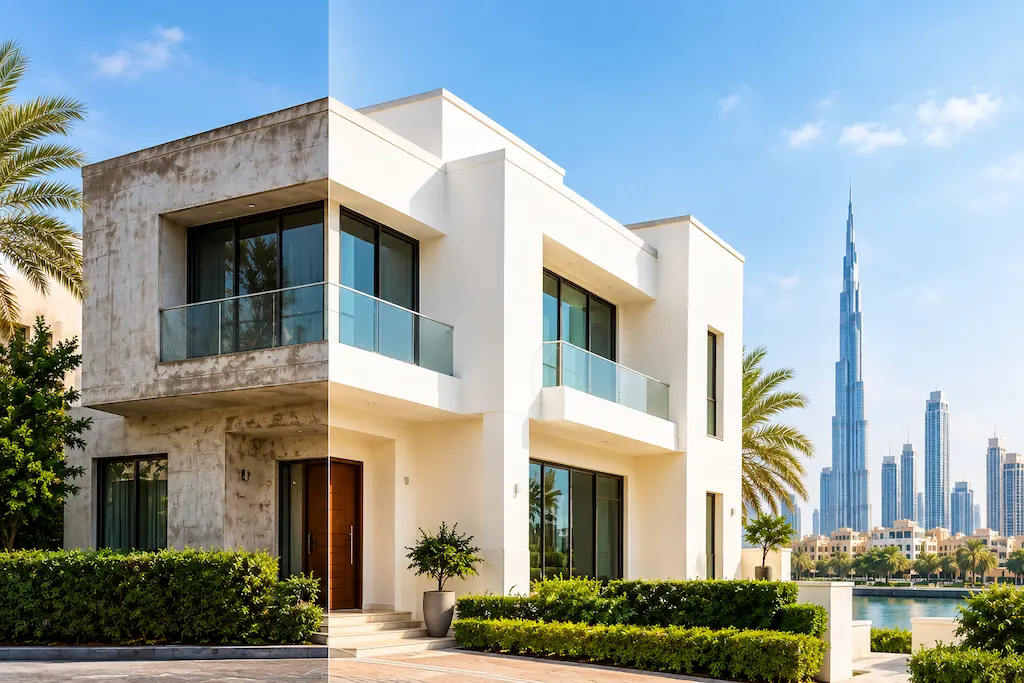
Case 3: Faded exterior restoration (Business Bay) A storage facility’s exterior had faded under sustained sun exposure. The repaint restored a vibrant, long-lasting finish and visibly changed the building’s appearance immediately.
What connects these three cases: none of them were simply “repaint the warehouse.” Each required a different priority safety, uptime, or weather resistance matched to a different part of the coating system.
These cases come from Frontline Technical Services’ warehouse painting Dubai project
Choosing a Warehouse Painting Contractor: What to Actually Ask
Skip the generic “are you licensed” questions. Ask these instead:
- What surface preparation steps are included, specifically, before painting begins?
- What coating system do you recommend for my traffic level and chemical exposure and why that one?
- Can the work be phased to avoid halting operations?
- What’s the realistic lifespan for my specific use case, not the marketing figure?
- Do you handle both interior floor coatings and exterior wall systems, or only one?
If a contractor can’t answer the second question with specifics about your facility, that’s a signal they’re quoting a generic paint job, not an industrial coating system.
Beyond Painting: Related Facility Needs
Warehouse upkeep rarely stops at the coating. Related services worth planning alongside a repaint:
- Commercial painting in Dubai for adjoining retail or showroom-facing units
- Wall painting in Dubai for interior finishing and durability
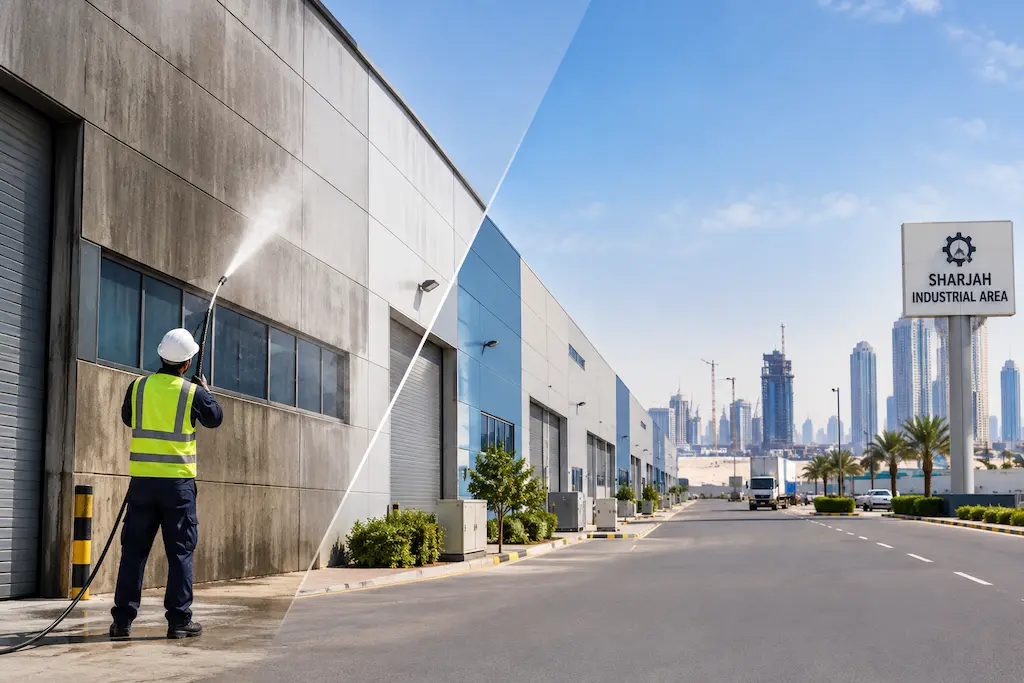
- Building cleaning services in Dubai to prepare exterior surfaces before repainting
For facilities located in Sharjah rather than Dubai, the same coating principles apply see painting services in Sharjah for that coverage area.
Frequently Asked Questions
How much does warehouse painting cost in Dubai?
Cost depends on floor area, coating system (epoxy vs. polyurethane vs. acrylic), and how much surface repair is needed before painting. A site inspection is the only reliable way to get an accurate figure ask for one before comparing quotes on price alone.
Can warehouse painting be done without stopping operations?
Yes. Phased scheduling working section by section, often during lower-activity hours allows painting to proceed without halting daily operations.
What’s the best coating for a warehouse floor in Dubai?
For heavy forklift traffic and chemical exposure, epoxy or polyurethane systems perform best. Polyurethane generally outlasts epoxy in UV and abrasion resistance, at a higher upfront cost.
How often should a warehouse be repainted?
Every 3–5 years for high-traffic floors, up to 8–10 years for lightly used areas with a proper maintenance plan and periodic topcoat renewal.
Does Dubai’s climate affect exterior warehouse coatings?
Significantly. UV exposure and heat degrade lower-grade exterior coatings faster than in temperate climates, making weather-resistant, UV-stable systems the practical baseline rather than an optional upgrade.