Drive the stretch of Emirates Road between Al Sajaa and Hamriyah on a weekday morning and you can watch the change happening in real time. Warehouse shells that were still wrapped in factory film eighteen months ago now carry a grey film of their own. Aluminium composite panels on units barely out of handover have already dulled to the colour of the road beside them. Facility managers across these zones are discovering the same thing in sequence: a new industrial building in Sharjah does not stay new-looking for long, and the exterior maintenance budget nobody planned for becomes the one they argue about first.
That pattern is not accidental. It is the direct consequence of how fast Sharjah’s industrial and free zone footprint has expanded and the exterior cleaning demand now following it. Frontline Technical Services works with commercial and industrial properties facing these maintenance challenges, where keeping large exterior surfaces clean is increasingly part of protecting the appearance and upkeep of the facility.
Quick answer: Sharjah’s industrial and free zone expansion is increasing exterior cleaning demand because it is adding large volumes of cladding, glazing and painted surface area in exactly the environments that soil fastest near cement and aggregate operations, deep-water port activity, petrochemical processing and continuous construction. More buildings, harsher exposure and lease-driven condition standards combine to make facade and exterior maintenance a recurring operational cost rather than an occasional one.
The growth behind the demand
Sharjah has long carried a heavier industrial load than its size suggests. Regional industry reporting has put the emirate at roughly 44% of the UAE’s industrial sector, with approximately 2,800 manufacturing units distributed across its industrial zones and free zones. More recent 2026 coverage counts around 21 industrial zones in operation.
The two free zones doing the heaviest lifting are distinct in character, and that distinction matters for exterior maintenance:
| Zone | Industrial character | Dominant exterior exposure |
| Hamriyah Free Zone (HFZ) | Oil and gas, petrochemicals, steel, lubricants, ship repair; reported 6,500+ companies across roughly 26 million m² with a 14-metre deep-water port | Airborne particulates, salt-laden coastal air, industrial fallout |
| Sharjah Airport International Free Zone (SAIF Zone) | Trading, logistics, electronics, precision and light manufacturing | Fine desert dust, high vehicle and aircraft traffic |
| Al Sajaa Industrial Area | Heavy manufacturing, building materials, expanding rapidly through 2026 | Cement and aggregate dust, constant construction activity |
| Sharjah Publishing City / SRTIP / Shams | Printing, research, technology, media and service businesses | Glazed commercial facades in active development zones |
The momentum is continuing. In July 2026, India’s Shyam Steel Group inaugurated its first manufacturing facility outside India at Hamriyah Free Zone, with a reported initial investment of AED 60 million and a phased roadmap of AED 150 million. It sits within Operation 300bn, the national strategy to lift industrial GDP contribution from AED 133 billion to AED 300 billion by 2031.
Every one of those projects arrives as built surface area. Cladding, curtain walling, roller shutters, painted parapets, glazed admin blocks and signage all of it exposed, all of it on a maintenance clock from the day of handover.
Why Sharjah’s industrial buildings soil faster
This is where the growth story becomes a maintenance story. Industrial zones generate their own soiling loads, and Sharjah’s zones each generate a different one.
- Cement and aggregate dust around Al Sajaa settles as a fine alkaline layer that bonds to painted metal and concrete. Left through a summer, it etches.
- Coastal salt at Hamriyah drives corrosion at panel joints, fixings and steel substructures well before the panel face itself fails.
- Petrochemical and heavy-industry fallout deposits an oily film that ordinary rinsing redistributes rather than removes.
- Construction adjacency is constant across expanding zones; a neighbouring plot under development re-soils a facade weeks after cleaning.
- Shamal winds and sand abrade coated surfaces and pack grit into glazing channels and gaskets.
The compounding effect is what catches owners out. A Dubai tower dealing mainly with dust and humidity is a simpler maintenance problem than a Hamriyah unit dealing with salt, particulates and oily deposits at once.
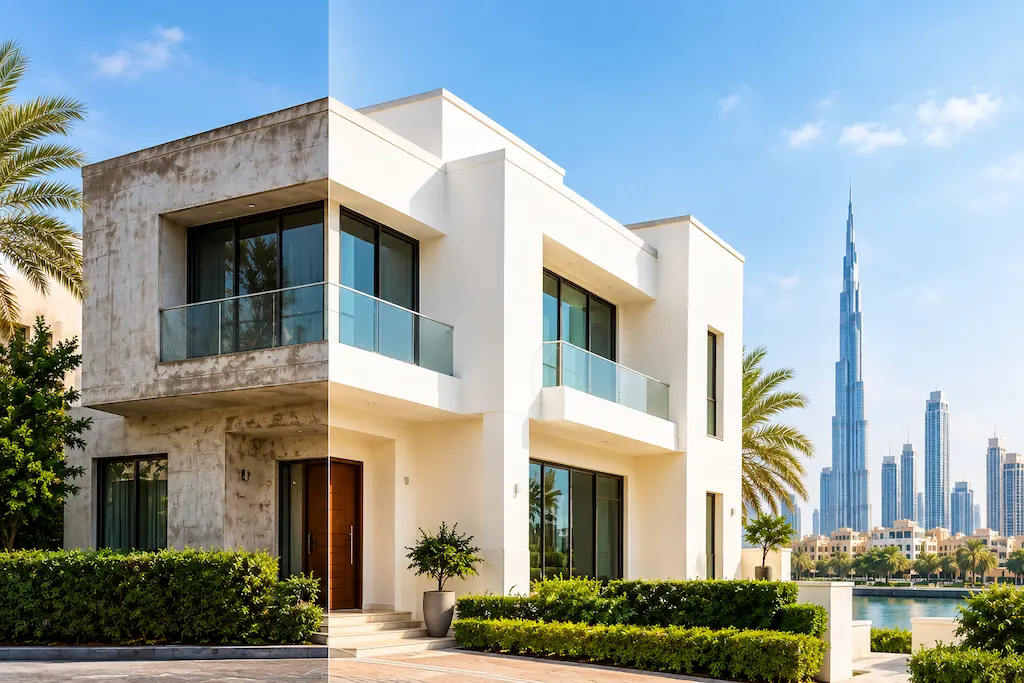
Cladding materials respond differently to each of these loads. Composite panels, coated steel and precast concrete all weather on different curves, which is why regular cleaning of precast concrete facade panels matters as much on an industrial shell as it does on a commercial tower the surface looks robust long after the sealed layer has stopped protecting it.
Lease conditions are turning cleaning into a contractual obligation
here is a second driver that gets less attention than the environmental one.
Free zone and industrial leases commonly carry expectations around external appearance, permitted signage and handover condition. Multinational tenants arriving with corporate HSE and brand standards typically bring their own exterior condition requirements on top of the landlord’s. And when a unit is sublet or handed back, reinstatement disputes frequently centre on exterior surfaces that were never maintained.
The practical result is that exterior cleaning moves out of the “when it looks bad” column and into the planned maintenance schedule. That shift is what’s reshaping the building cleaning industry in Sharjah contracts are moving from reactive call-outs toward scheduled annual programmes, and providers are being selected on access certification and reporting rather than on price per wash.
Industrial buildings need different access, not just different cleaning
A 40-storey tower and a 12-metre warehouse are opposite access problems, and Sharjah’s growth is producing far more of the second than the first.
| Building type | Access challenge | Typical approach |
| Warehouse and factory shells | Long horizontal runs, live loading bays, limited shutdown windows | Rope access or elevated platforms, phased around operations |
| Admin and office blocks within plots | Full-height glazing on a small footprint | Rope access, water-fed poles for lower levels |
| Storage tanks, silos, structural steel | No safe edge access, corrosion-critical | IRATA-certified rope access |
| Port-adjacent and coastal units | Salt-loaded surfaces, restricted zone access | Rope access with corrosion-appropriate detergents |
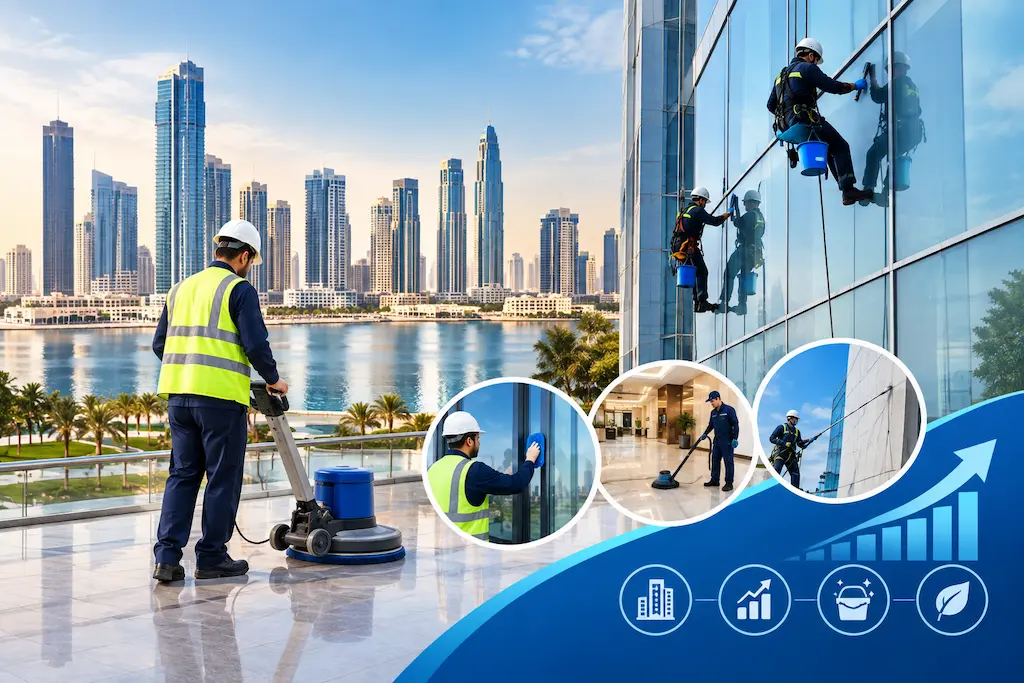
Scaffolding a 200-metre warehouse elevation is slow and expensive, and cradles need structures that industrial buildings rarely have. Rope access is usually the practical answer, the same discipline applied to rope access cleaning on Dubai’s high-rise glass, redeployed horizontally across industrial elevations without shutting a facility down.
Frontline Technical Services works across Dubai and Sharjah with IRATA-certified rope access teams, eco-friendly detergents suited to coated and composite surfaces, and 20 years of exterior maintenance experience on UAE buildings.
Cleaning is only half of what the growth is generating
Industrial surfaces reach a point where washing alone stops delivering. Coatings chalk, colour fades unevenly, and salt-driven corrosion starts at fixings and edges.
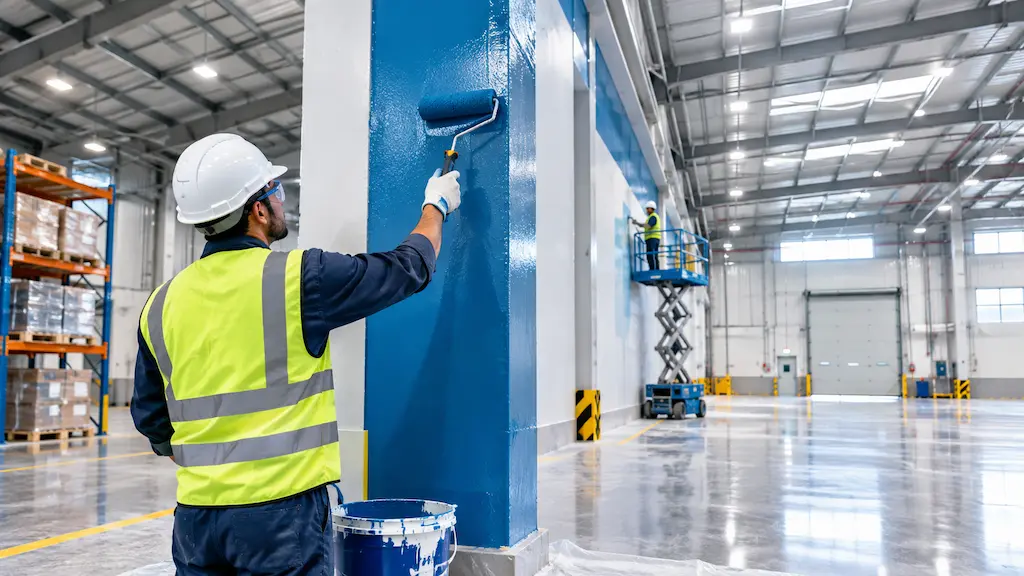
That is why exterior painting demand tracks cleaning demand closely in these zones building, commercial and wall painting on shells that need recoating rather than another wash. Bird activity around port and food-processing operations adds a third layer, with bird spike installation protecting ledges, parapets and signage from deposits that stain and corrode on contactAdd these after the final section:
Conclusion
Sharjah’s industrial expansion is not producing exterior cleaning demand as a side effect. It is producing it directly, and in a form that doesn’t go away.
Every new unit at Hamriyah, Sajja or SAIF Zone adds cladding, glazing and painted surface into an environment that attacks all three at once cement dust, coastal salt, industrial fallout and near-permanent construction activity next door. Layer lease condition standards and corporate HSE requirements on top, and exterior maintenance stops being discretionary. It becomes a scheduled line item, the same as SEWA bills or fire system servicing.
For facility managers, the practical takeaway is simple: budget exterior cleaning from handover, not from the first complaint. A facade cleaned on a planned cycle stays a cleaning job. A facade left three summers in a Sharjah industrial zone becomes a restoration job, and the cost gap between those two is not small.
Planning exterior maintenance for an industrial or free zone property in Sharjah?
Frontline Technical Services delivers facade cleaning, building exterior cleaning, glass and cladding cleaning, exterior painting and bird spike installation across Sharjah, Dubai and the wider UAE with IRATA-certified rope access teams, eco-friendly detergents and 20 years of UAE exterior maintenance experience.
Frequently Asked Questions
Why is cleaning demand rising in Sharjah’s industrial and free zones?
Because growth is adding built exterior surface area in the harshest conditions in the emirate. Sharjah has been reported to account for around 44% of the UAE’s industrial sector, and continued expansion across Hamriyah Free Zone, SAIF Zone and Al Sajaa means more cladding, glazing and painted surfaces exposed to cement dust, coastal salt and industrial fallout at the same time.
How often should an industrial building in Sharjah have its exterior cleaned?
It depends on location and exposure. Units near cement, aggregate or petrochemical operations generally need more frequent attention than inland light-manufacturing units, and coastal buildings at Hamriyah need salt addressed before it reaches fixings and joints. A site assessment sets the right cycle rather than a fixed calendar rule.
Is warehouse exterior cleaning different from high-rise facade cleaning?
Yes, mainly in access. Warehouses present long horizontal elevations at lower heights, often with live loading bays and limited shutdown windows, while towers present full-height vertical access. Rope access works for both, but the rigging, sequencing and operational planning are different.
Why is rope access used on industrial buildings instead of scaffolding?
Scaffolding a 200-metre warehouse elevation is slow, costly and disruptive to operations. Cradle systems need structural provisions that industrial buildings rarely have. IRATA-certified rope access reaches the same surfaces faster and allows work to be phased around a working facility.
Does coastal salt at Hamriyah really damage buildings?
It does, and usually from the edges inward. Salt concentrates at panel joints, fixings and steel substructures, where corrosion starts well before the panel face itself shows failure. Removing salt deposits on a regular cycle is preventive maintenance, not cosmetic work.
Do free zone leases require exterior maintenance?
Free zone and industrial leases commonly carry expectations around external appearance, signage and handover condition, and many multinational tenants apply their own corporate standards on top. Exact obligations vary by zone and lease, so tenants should check their specific agreement.