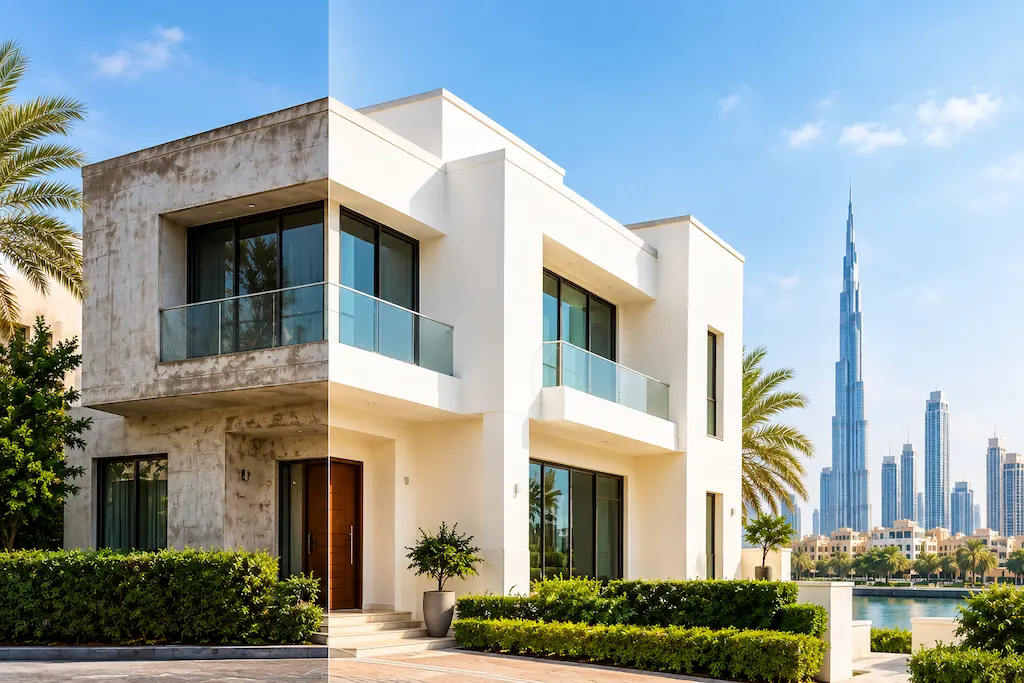
A few years ago, I walked around a six-year-old office building in Dubai Investments Park with its facility manager. The precast panels had been specified in a warm, sand-coloured finish that looked superb in the handover photos. By the time I saw them, they had turned a patchy grey-brown, with dark streaks under every window reveal and a white, chalky crust spreading along the lower panels. The building was structurally fine. It just looked twice its age, and the manager was worried about what the staining might be hiding.
As someone who has worked in building maintenance for years, I’ve seen how precast concrete facade panels can transform the look of a structure. They’re durable, attractive and versatile. But my work with Frontline Technical Services has shown me that even robust panels need regular care to keep their appearance and performance.
In this post, I’ll explain why maintaining these panels isn’t just about looks; it’s essential for their longevity and safety, especially in UAE conditions.
Quick answer: Precast concrete facade panels need regular cleaning because dust, salt, pollution, bird droppings and biological growth stain the surface, trap moisture and can accelerate deterioration of joints and reinforcement. In the UAE, a light low-pressure wash every 6 to 12 months, with periodic inspection of joints, sealants and cracks, keeps panels looking good and helps catch problems early.
Understanding Precast Concrete Facade Panels
Precast concrete facade panels are manufactured off-site in controlled factory conditions, then lifted into place as exterior cladding. They’re common on offices, warehouses, schools, hospitals and residential towers across the UAE.
Key advantages:
- Durability: resistant to weathering, fire and pests.
- Design flexibility: can mimic stone, brick or textured finishes, and be produced in a wide range of colours.
- Time efficiency: faster to install than traditional masonry.
Despite these benefits, environmental exposure takes its toll. Dust, pollution, bird droppings, algae and mould accumulate over time, dulling the surface and, if left alone, contributing to longer-term damage.
Why the UAE Is Hard on Concrete
This isn’t just an impression from the field; decades of research back it up.
A study by researchers at King Fahd University of Petroleum and Minerals found that after only 10 to 15 years of service, many reinforced concrete structures around the Arabian Gulf were showing an alarming degree of deterioration, with corrosion of the reinforcement the most common cause. The research drew on data from 20 structures and 108 concrete cores.
Related research from the same university identifies why: salt-laden humidity blown in from the Gulf on hot summer days, with relative humidity reaching close to 100%, accelerates corrosion.
For precast panels, that means:
| UAE factor | Effect on precast panels |
|---|---|
| Salt air near the coast | Salts settle on the surface and can work into joints and cracks |
| Fine desert dust | Dulls finishes and holds moisture against the panel |
| High summer humidity | Keeps surfaces damp overnight, feeding stains and biological growth |
| Extreme heat cycles | Expansion and contraction stress joints and sealants |
| Bird droppings | Acidic enough to stain and etch finishes over time |
Regular cleaning doesn’t replace proper concrete design or repair, but it removes surface contaminants before they sit for months, and it gives someone a close look at the facade on a regular schedule.
Why Regular Cleaning Matters
1. Enhances aesthetic appeal
From managing multiple commercial buildings, I’ve seen that facades that weren’t cleaned regularly looked worn and neglected, even when the structure was in perfect condition. A clean facade:
- Reflects professionalism and attention to detail.
- Creates a welcoming impression for visitors, tenants and clients.
- Keeps the panels’ original colour and texture visible.
2. Prevents long-term damage
Dirt and pollutants are more than cosmetic. Over time, they can:
- Trap moisture, leading to stains and, where it reaches reinforcement, corrosion.
- Encourage mould and algae, which can degrade the panel surface.
- Worsen micro-cracks, which widen under repeated heat cycles.
Cleaning consistently reduces these risks and extends the life of your facade.
3. Supports structural integrity
A neglected facade can eventually affect safety. Water penetration, biological growth and chemical build-up can deteriorate joints and seals. Buildings with routine cleaning schedules tend to need fewer costly repairs, because regular facade cleaning in Dubai puts trained eyes on the panels often enough to spot minor issues before they escalate.
Warning signs to report during cleaning:
- Rust-coloured staining running from joints or cracks
- Cracks wider than a hairline, or cracks that grow between cleans
- Spalling, where pieces of the surface break away
- Failed, split or missing sealant in panel joints
- White crusting (efflorescence) that keeps returning in the same place
These need a professional inspection, not just another wash.
4. Improves energy efficiency
Clean, light-coloured panels reflect more sunlight than dirty ones, which helps limit heat absorption. The principle is built into Dubai’s own standards: Dubai Municipality’s Al Sa’fat green building system includes a clause on light colours on the outside of buildings, with a certification scheme for paints and coatings. Dust and grime gradually darken a facade and erode that benefit.
The effect on any single building varies, but in a climate where cooling runs most of the year, keeping reflective surfaces clean is a small step with real operational value.
Best Practices for Cleaning Precast Concrete Panels
Based on years of hands-on work, this is the approach I recommend:
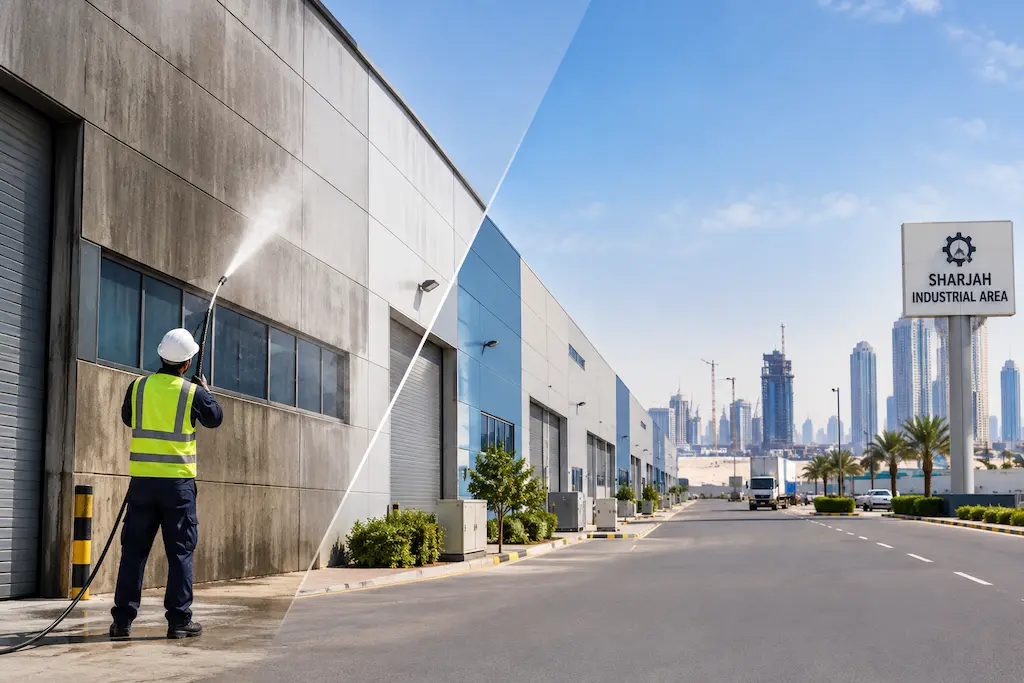
- Routine cleaning: a light, low-pressure wash every 6 to 12 months to remove dust and surface dirt. Coastal and dusty sites sit at the shorter end.
- Deep cleaning: targeted treatment every 2 to 3 years for stubborn stains, efflorescence or biological growth, always with products suited to the panel’s finish.
- Professional inspection: check joints, sealants, cracks and staining patterns at every clean.
- Protective treatment: ask whether your panels have a water-repellent sealer, and whether it’s due for reapplication; a sealed surface sheds water and dirt much more easily.
- Safe access: mid- and high-rise precast facades are best cleaned using rope access cleaning, which reaches every panel without scaffolding. We explain the trade-offs in our comparison of rope access instead of scaffolding.
Matching the method to the finish
| Panel finish | Safe cleaning approach |
|---|---|
| Smooth or form finish | Low-pressure wash, soft brush, pH-neutral cleaner |
| Exposed aggregate | Low pressure only; high pressure can loosen aggregate |
| Acid-etched or sandblasted | Gentle products; test first, as strong chemicals can alter the texture |
| Painted or coated panels | Mild detergents only; check the coating’s condition while cleaning |
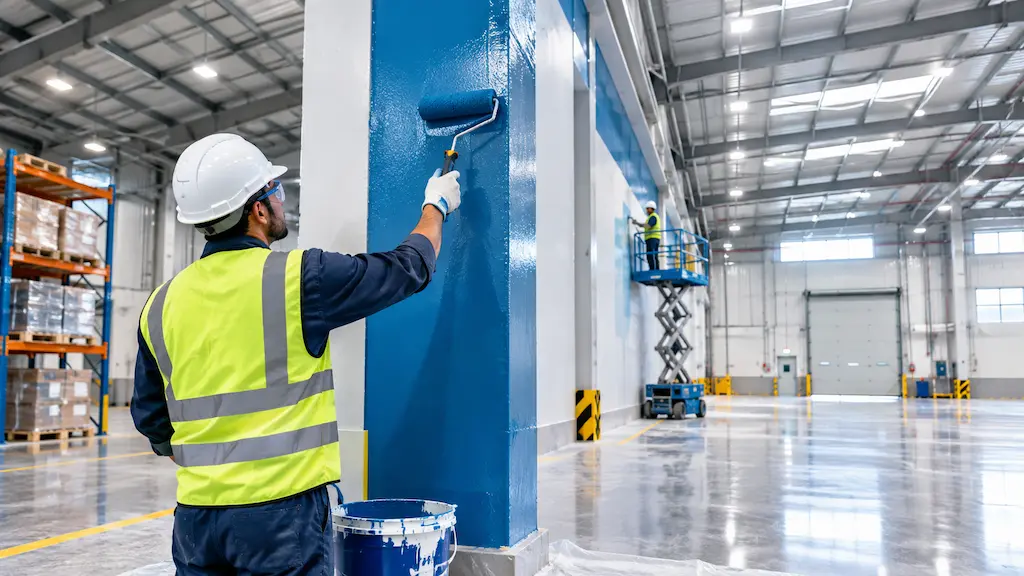
If a coated panel’s finish is faded, chalky or peeling, cleaning won’t restore it. At that point, recoating as part of building painting works is the longer-term fix.
Tips From Experience
- Avoid harsh chemicals and strong acids unless tested on a hidden area first; they can etch concrete and change its colour.
- Use soft brushes or low-pressure washers, especially on textured and exposed-aggregate finishes.
- Stop birds at the source. Ledges and window reveals are favourite perching spots; bird spikes installation in dubai, keep droppings off panels between cleans.
- Document every clean. Record dates, methods, photos and any defects so you can track changes over time.
Coastal buildings need extra attention. Along the Sharjah corniche and in waterfront areas such as Al Khan and Al Majaz, salt settles on concrete facades quickly, so owners often schedule facade cleaning in Sharjah at the shorter end of the cycle to keep salt from building up in joints.
Conclusion
Regular cleaning of precast concrete facade panels isn’t just an aesthetic choice; it’s an investment in the longevity, safety and efficiency of your building. From my experience, buildings that follow a structured cleaning and inspection routine stay attractive, sound and cost-effective for decades. Understanding what facade cleaning covers and why it matters makes it easier to build that routine into your maintenance plan.
A clean facade reflects more than good looks; it shows care, professionalism and foresight.
Frequently Asked Question
1. How often should precast concrete facade panels be cleaned?
Most buildings benefit from professional facade cleaning every 6 to 12 months. Coastal, dusty or high-traffic locations in the UAE usually need the shorter interval.
2. Can dirty precast concrete panels cause long-term damage?
Yes. Dirt, salt and moisture stain the surface and, over time, can contribute to deterioration of joints, sealants and, in severe cases, the reinforcement inside the panel.
3. What is the best method for cleaning precast concrete facade panels?
Low-pressure washing with suitable, non-abrasive, pH-neutral products is the safest and most effective method for most finishes. Exposed-aggregate and acid-etched panels need extra care.
4. Can pressure washing damage precast concrete?
It can. High pressure can erode surface finishes and loosen exposed aggregate. Always use the lowest effective pressure and test on a small area first.
5. What is the white residue on my concrete panels?
Usually efflorescence: salts carried to the surface by moisture. It can be cleaned, but if it keeps returning, it’s a sign water is getting into the panel and the source should be investigated.
6. Does regular facade cleaning improve building value?
Yes. A clean facade improves curb appeal, protects the exterior and helps maintain the property’s value and rental appeal.