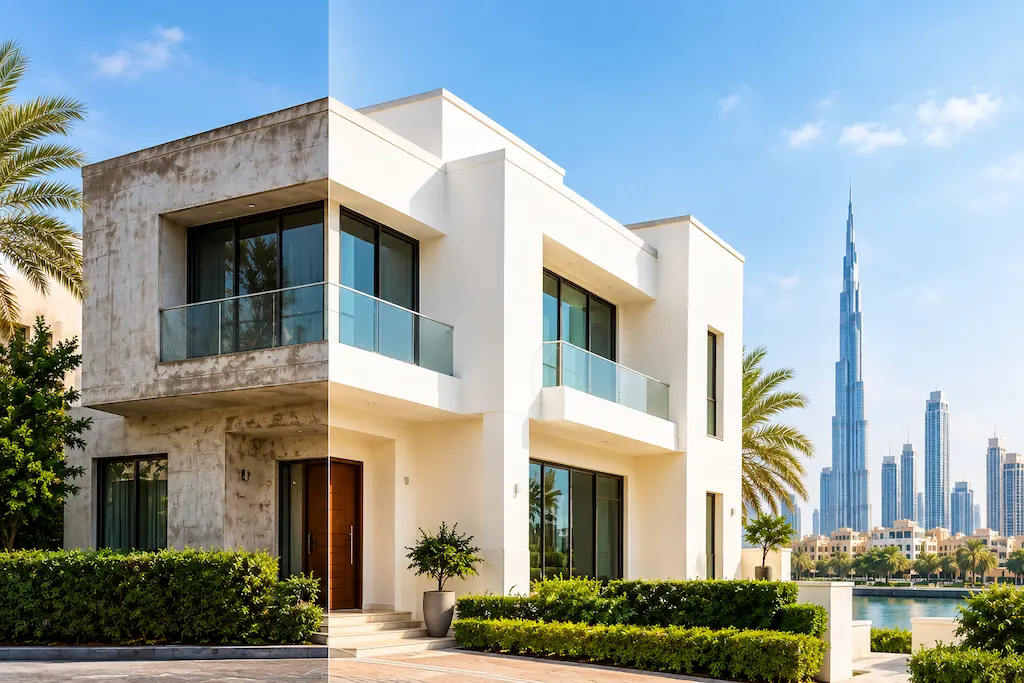
Quick Answer: Based on our experience maintaining properties across the UAE, most villas and buildings benefit from repainting every 5–7 years, while coastal or high-exposure areas may require repainting every 3–5 years. Regular inspections help identify early signs of wear before costly repairs become necessary.
A villa owner in a coastal community once called us about paint that had failed less than three years after a full repaint. Walking the elevations, the cause was obvious before we reached the second wall the previous contractor had painted straight over salt-laden surfaces without washing them down. The coating never had a chance to bond. From what I’ve seen over the years, the biggest difference comes from proper surface preparation and high-quality, weather-resistant materials. When those steps aren’t skipped, paint lasts longer, looks better, and stands up far better to the UAE’s climate.
That’s where Frontline Technical Services comes in. We work with these conditions every day, use proven materials, and follow the prep steps many contractors skip. The result is paintwork that holds up, looks clean, and costs you less over the life of the building.
Repainting intervals by exposure
| Property situation | Typical repaint interval | Main driver |
|---|---|---|
| Inland villas, sheltered elevations | 6–7 years | UV and heat cycling |
| Standard urban buildings | 5–7 years | Sun, dust, pollution film |
| Coastal properties (Jumeirah, Al Khan, Corniche) | 3–5 years | Salt-driven corrosion and blistering |
| High-exposure and unshaded south/west walls | 3–5 years | Direct UV on the binder |
| Industrial-adjacent buildings | 4–5 years | Airborne particulates and chemical fallout |
These are planning figures, not guarantees. Actual life depends far more on preparation quality than on the paint brand.
What shortens paint life in the UAE
Sun and UV breaks down pigments and the binder holding the paint together.
- Salt air on coastal properties promotes corrosion and blistering, especially on metal
- Sand and wind act like sandpaper on the finish
- Heat cycles hot days and cooler nights open tiny cracks over time
These four rarely act alone. A coastal villa deals with salt, UV and sand simultaneously, which is why coastal intervals sit years shorter than inland ones.
A short yearly check and simple touch-ups go a long way, and a house painting service in Dubai can support that routine by keeping surfaces protected between full repaints. The same approach applies when arranging a painting service in Sharjah, where regular inspections and timely touch-ups can help prevent small surface issues from becoming larger repairs.
Signs to act now
Walk your property once a year and look closely. If you find one or more of these, plan repairs rather than waiting for the calendar:
- Paint peeling, or large flakes coming off the wall
- Chalky residue on your hand when you rub the surface
- Cracks that trap water after rain
- Rust stains seeping through on metal
- Mildew that returns after cleaning
A single small chip isn’t an emergency. Widespread peeling, heavy chalking, or cracks holding water mean a full job is coming, and delaying it usually means paying for substrate repair on top of paint.
Choosing products that last
Better paint and the right primer make a measurable difference to how long the job survives.
| Condition | What to specify |
|---|---|
| Sun-exposed exteriors | UV-resistant exterior formulations |
| Coastal properties | Anti-corrosion or salt-resistant systems |
| Walls that move with heat | Elastomeric coatings that flex rather than crack |
| Metal surfaces | Rust treatment plus a dedicated metal primer |
| Interior kitchens and bathrooms | Mildew-resistant paints |
Never skip a suitable primer. It’s what gives the topcoat something to hold onto, and it’s the first line item cheap quotes remove. Spend a little more on the right products and you usually spend less over time, the same logic that decides which outdoor wall paint lasts longest against sun, rain and dust.
For coastal and sun-exposed homes, villa painting services in dubai play a large part in keeping exterior surfaces protected for longer.
Prep work separates a good job from a bad one
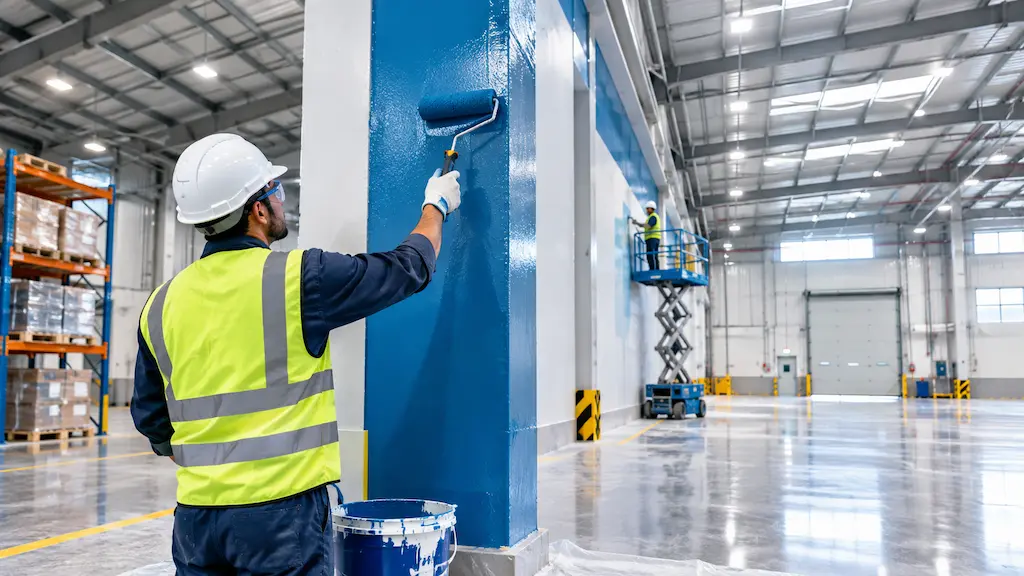
A proper paint job is mostly preparation. The sequence matters, and skipping any step shortens the result:
- Wash the surface to remove salt and grit
- Remove all loose and flaking paint
- Treat rust and prime any metal
- Fill and seal cracks
- Apply primer
- Apply two quality topcoats
If a contractor’s quote doesn’t itemize these steps, the quote is incomplete. Ask for photographs of the prep stage. If they can’t or won’t show them, assume corners were cut and price the repeat job into what you’re being quoted.
Why yearly maintenance pushes the repaint date out
A little routine care buys you years. Ten to fifteen minutes once a year covers most of it:
- Walk the exterior and note chips, cracks and stains
- Wash facades annually to remove salt and dust
- Touch up small chips quickly, before water gets behind the coating
- Replace failed sealant around windows and joints
- Trim plants back from walls so damp foliage doesn’t stain
For larger villas and buildings, regular exterior cleaning including high-rise window washing, protects paint and extends surface life in harsh UAE conditions.
Sharjah properties often need a shorter cycle
Repaint intervals shift once you cross into Sharjah, and for two different reasons depending on where the building sits.
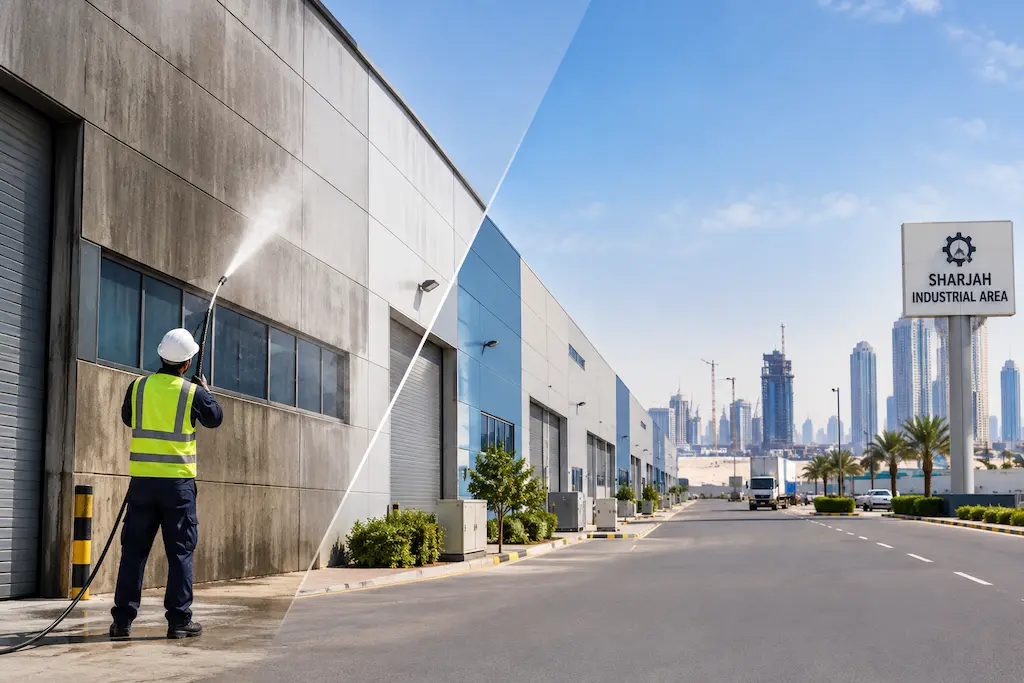
Properties near Khalid Lagoon, Al Khan and the Corniche face constant salt-laden air, which attacks metalwork, railings and window frames before the wall surfaces show anything. Buildings around Industrial Area and the Sajja corridor face heavy airborne dust instead, which abrades the finish and traps moisture against the coating.
Both conditions favour shorter intervals and more thorough washing before recoating, which is how our painting services in Sharjah are planned rather than applying a single Dubai schedule across both emirates.
Focus on quality, not the lowest quote
Cheap paint or skipped prep usually creates a repeat job. One proper application with good primer and UV-resistant paint outlasts two cheap ones, which means the lowest quote is rarely the best value.
Treat repainting as maintenance, a planned expense that protects the structure and prevents far larger repairs. If your villa or building is already showing fading or surface wear, professional building painting services can restore and protect the structure before damage reaches the substrate.
Conclusion
Repainting in the UAE gets much easier once you understand what actually shortens paint life. Sun, salt and dust wear surfaces down fast, so catching the early signs saves both time and money.
My take is simple: stay ahead of the damage. A sensible schedule, solid preparation and quick touch-ups always pay off. They keep the property looking clean and prevent the bigger problems that follow neglected coatings.
If your paint is fading or beginning to crack, now is the moment to act. Fresh, properly executed work protects the property, lasts longer, and removes the stress of constant repairs.
Want your property assessed before the damage spreads?
Frontline Technical Services delivers villa, building and commercial painting across Dubai, Sharjah and the wider UAE with proper surface preparation, weather-resistant systems and 20 years of UAE property maintenance experience.
Frequently Asked Question
How do I know if my villa or building needs repainting?
Fading, peeling, cracks, bubbling paint and moisture stains are the common signs. Chalky residue on your hand after rubbing the wall is an early one worth acting on before peeling starts.
How often should a building be repainted in the UAE?
Most properties need repainting every 5–7 years. Coastal and high-exposure buildings often need it every 3–5 years because salt and direct UV break coatings down faster.
What type of paint is best for buildings in the UAE?
High-quality UV-resistant, weatherproof exterior paints give the best protection. Coastal properties should specify anti-corrosion or salt-resistant systems, and walls that move with heat benefit from elastomeric coatings.
Why did my paint fail after only two or three years?
Almost always preparation rather than product. Painting over salt, dust or loose coating prevents proper adhesion, and no quality of paint survives a surface it couldn’t bond to.
Does regular repainting actually protect a building?
Yes. Timely repainting protects exterior surfaces from sun damage, moisture ingress and premature deterioration of the substrate underneath.
Can delaying repainting increase maintenance costs?
Yes. Once coating failure lets water reach the substrate, you’re paying for crack repair, rust treatment or render work in addition to the paint job itself.